The device is not the box
Updated September 2026
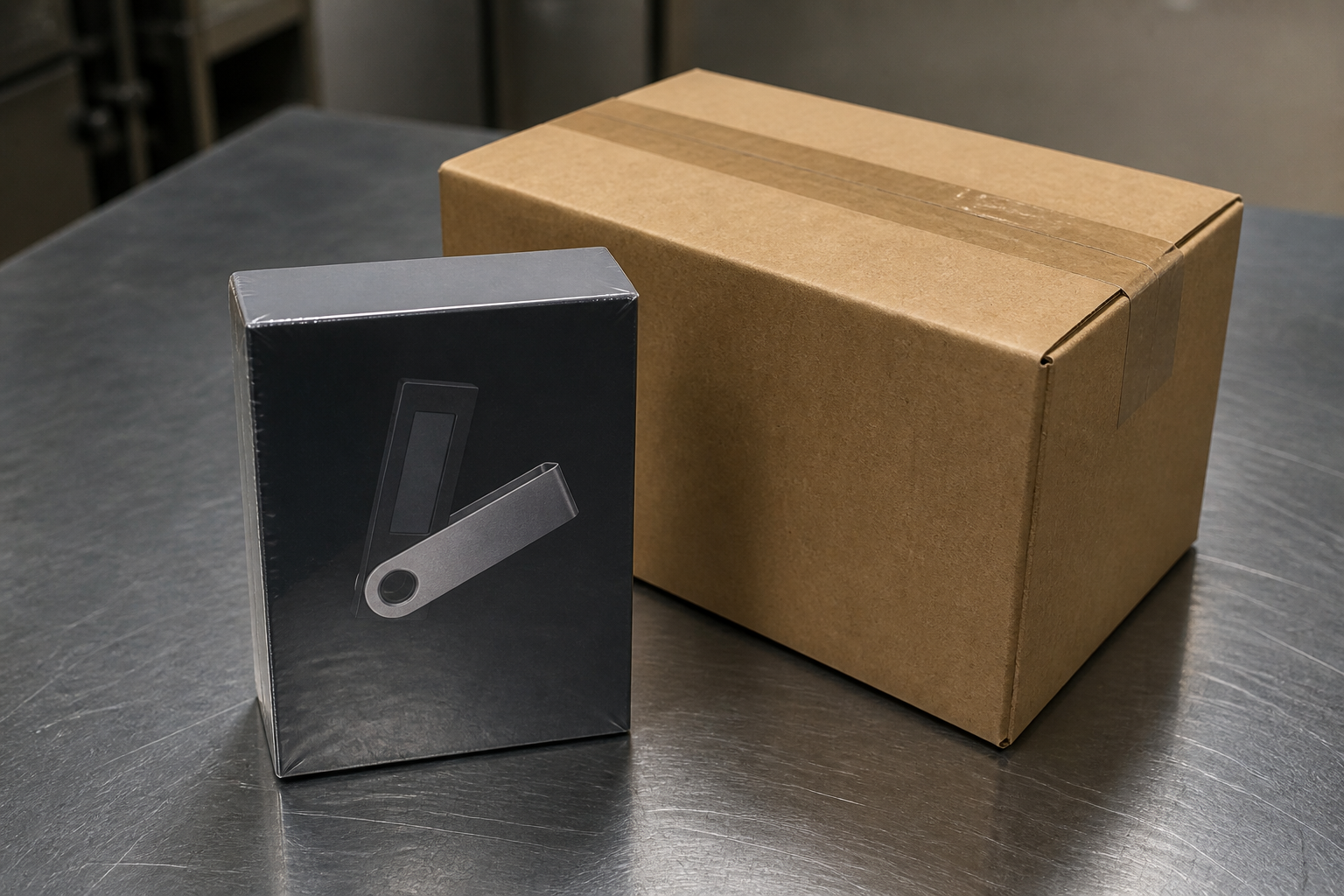
People buy a hardware wallet because they want the key in something they can put in a drawer. That is a good habit. It is not Schrödinger's box. The box on this site is the hash of the public key, on the chain, until a spend — or Taproot receipt — publishes it.
Two different boxes
The product box is plastic and a seed card. The CatBitcoin box is a script hash. Mixing them is how a shop page pretends a device is quantum-safe. It is not, and it does not need to be today. Nothing that exists can break secp256k1 in time to steal coins. Open versus closed is still a checkable fact.
What the device does
It signs. The public key and the address type are chosen by the software you plugged it into. A hardware wallet will happily spend a P2PKH output and put the key on the chain. It will happily receive to Taproot and put the key on the chain at arrival. That is the protocol, not a firmware bug. Read the key in the box if those two keys are still one object in your head.
What the device does not
It does not re-seal an address you already spent. It does not hide a Taproot key. It does not make reuse safe. If you published one receive string on a profile for years, the device will keep signing that open box. Reuse is opening it twice.
What to check
Paste the receive address into Schrödinger's Wallet. If you want coins on a still-closed hash-based address, follow how to move them. Leave the device in the story as the place the private key lives. Do not let a manufacturer page steal the metaphor.
Quick answers
- Does a hardware wallet keep the box closed?
- No. Closed versus open is decided by address type and spend history, not by where the key is stored.
- Is a hardware wallet useless for this?
- No. It is useful for keeping the private key off a laptop. That is a different job.
- Does Taproot on a hardware wallet stay closed?
- No. Taproot publishes the key on receipt, on any device.