How to move coins to a still-closed address
Updated September 2026
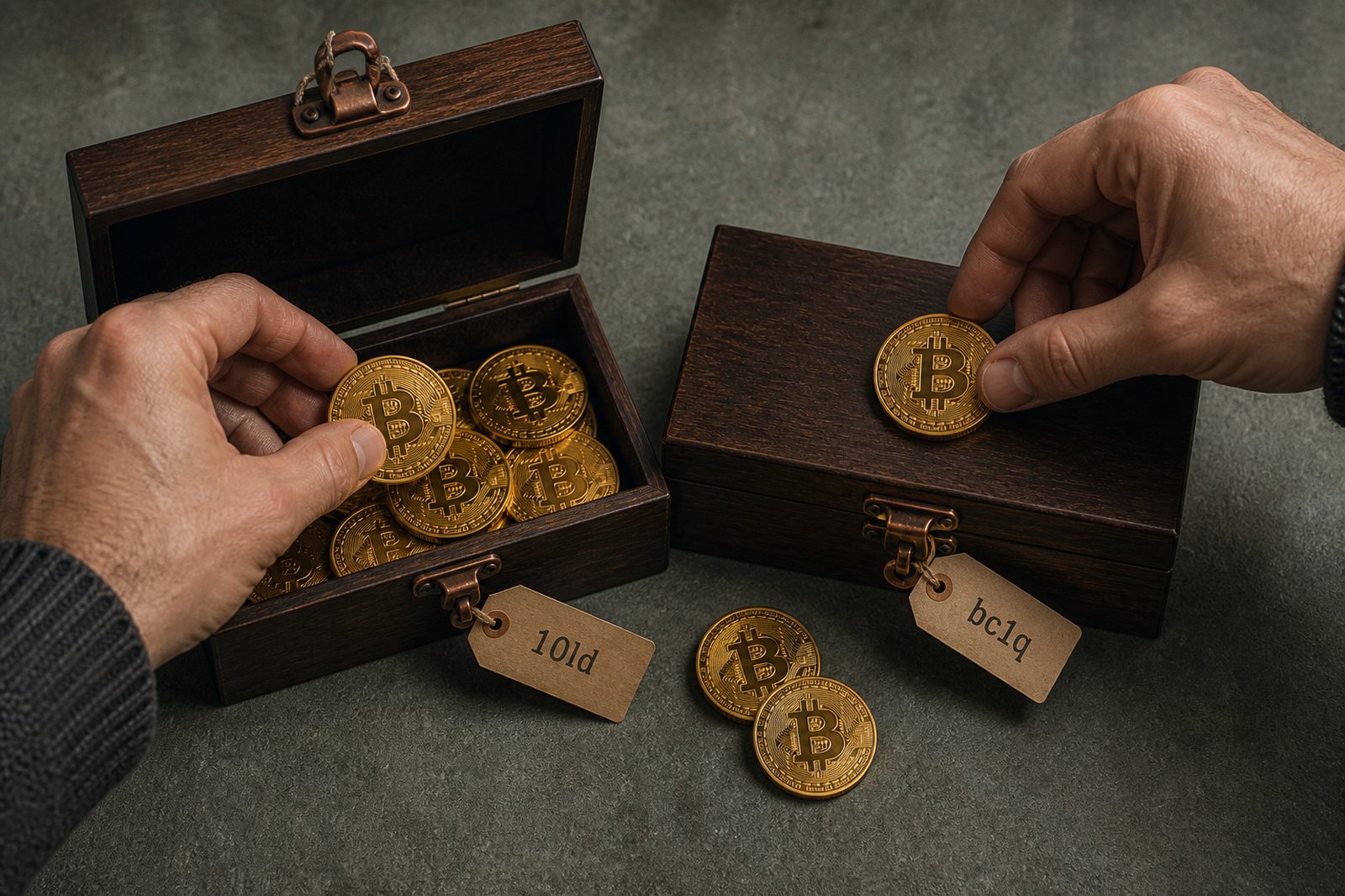
People asking how to move bitcoin to a safer address are usually really asking something narrower: does sending my coins to a new address actually reduce my exposure, or is it just busywork? The honest answer is that it helps, but only if you do it in a specific way. Moving funds to a fresh, unspent output does not erase the fact that your old address's public key is now on the blockchain forever. What it does is get your balance out of that exposed output and into one that hasn't signed anything yet, which matters if you're trying to reduce the number of your coins sitting in the most exposed tier while the industry works out a longer-term fix.
what moving your coins actually changes
Every Bitcoin address is a hash or a commitment built from a public key, and that public key only becomes fully visible on-chain once you spend from the address (with one exception, covered below). Older format types, P2PKH addresses starting with "1", P2SH starting with "3", and native SegWit v0 addresses starting with "bc1q", all keep the raw public key hidden until the first spend. If you've never spent from one of these, only a hash of your key is public. Taproot addresses, the ones starting with "bc1p" and active since November 2021, work differently: the address itself commits to the actual public key, so it's exposed the moment funds arrive, not just when you spend.
That distinction is the whole reason this guide is worth following carefully. If you send from an old, unspent hash-based address to a brand new hash-based address, the act of spending permanently reveals the old address's key, but your coins end up in a new output that's still hash-protected. You haven't undone the old exposure, but you've stopped adding to it going forward. You can check where any given address currently stands with a tool that reads its on-chain spend history and exposure tier before and after you move anything.
the steps
- Generate a fresh address in your existing wallet. Don't reuse any address you've used before, and don't reuse one you've merely received to but never spent from if you're trying to start clean. Most modern wallets generate a brand new, never-used address by default every time you tap "receive."
- Choose a hash-based address type if your wallet lets you pick. A native SegWit (bc1q) address keeps your new public key hidden until you eventually spend from it again. A Taproot (bc1p) address is perfectly secure against every threat that exists today, but it exposes its key immediately on receipt, which defeats part of the purpose of this exercise.
- Send your entire balance in a single transaction. Use your wallet's "send max" or "sweep" function if it has one, rather than typing an amount by hand.
- Wait for at least one confirmation, then confirm the new address shows the full balance and the old one shows zero.
| Address type | Prefix | Public key visible |
|---|---|---|
| Legacy | starts with 1 | only after first spend |
| Nested SegWit | starts with 3 | only after first spend |
| Native SegWit | starts with bc1q | only after first spend |
| Taproot | starts with bc1p | immediately on receipt |
why sending the full balance is the part people skip
Here's the mistake that quietly defeats the whole point of doing this. If you send only part of your balance to the new address and leave a remainder in the old one, your wallet will typically route the leftover into a change output, and depending on your wallet's behavior that change can land back on an address tied to the same exposed key material, or simply sit stranded in the old, now-spent address alongside whatever you didn't move. Either way, you've spent from the exposed address (revealing its key, which was going to happen regardless) without actually getting all your coins clear of it. There's no partial credit here. Spending from an address reveals its key whether you move one sat or the whole balance, so if you're doing this at all, do it completely in one transaction and leave nothing behind to manage later.
test small, verify everything
Before you move a meaningful balance, send a small test amount to the new address first, ideally an amount you wouldn't mind losing to a typo. Confirm it arrives, confirm the address in your wallet's transaction history matches what you intended, and only then send the rest. If you're sizing that test amount and thinking in sats rather than BTC, the checker will tell you whether the destination is still a closed box.
Verify the destination address character by character, not just the first and last few digits, since clipboard-hijacking malware is specifically built to swap addresses while leaving the beginning and end looking familiar. If you're using a hardware wallet, always confirm the address shown on the device's own screen, not just what your computer displays. None of this is unique to quantum concerns; it's the same discipline that protects any Bitcoin transaction from the far more common threat of malware and human error.
what this does and doesn't solve
This is a hygiene move, not a fix. It reduces how much of your balance sits in an already-exposed output, but it doesn't touch the roughly 5.4 million BTC across the network that's already exposed from prior spends, and it can't do anything about coins you don't control. It also isn't a substitute for whatever migration path the protocol eventually settles on. BIP-360 and BIP-361 are still draft proposals for a quantum-resistant address format, and neither is active consensus today, so treat this guide as good practice now rather than a permanent solution. For the fuller picture of what's actually changed, what these proposals contain, and the genuinely contested question of whether long-dormant exposed coins should ever be restricted, the longer explainer covers it without the speculation.
The rule worth keeping: if you spend from an exposed address at all, spend all of it, in one transaction, to a fresh address you generated yourself, and leave nothing behind.
Quick answers
- Does moving coins hide the old public key?
- No. The spend publishes it forever. Moving gets the balance out of that open output.
- Which new address type should I use?
- A fresh bc1q (or 1 / 3) you have never spent from, if your goal is a closed box after arrival.
- Should I leave leftover coins on the old address?
- No. Partial sends waste the observation. Sweep the full balance.