Change is a second output, not a second secret
Updated September 2026
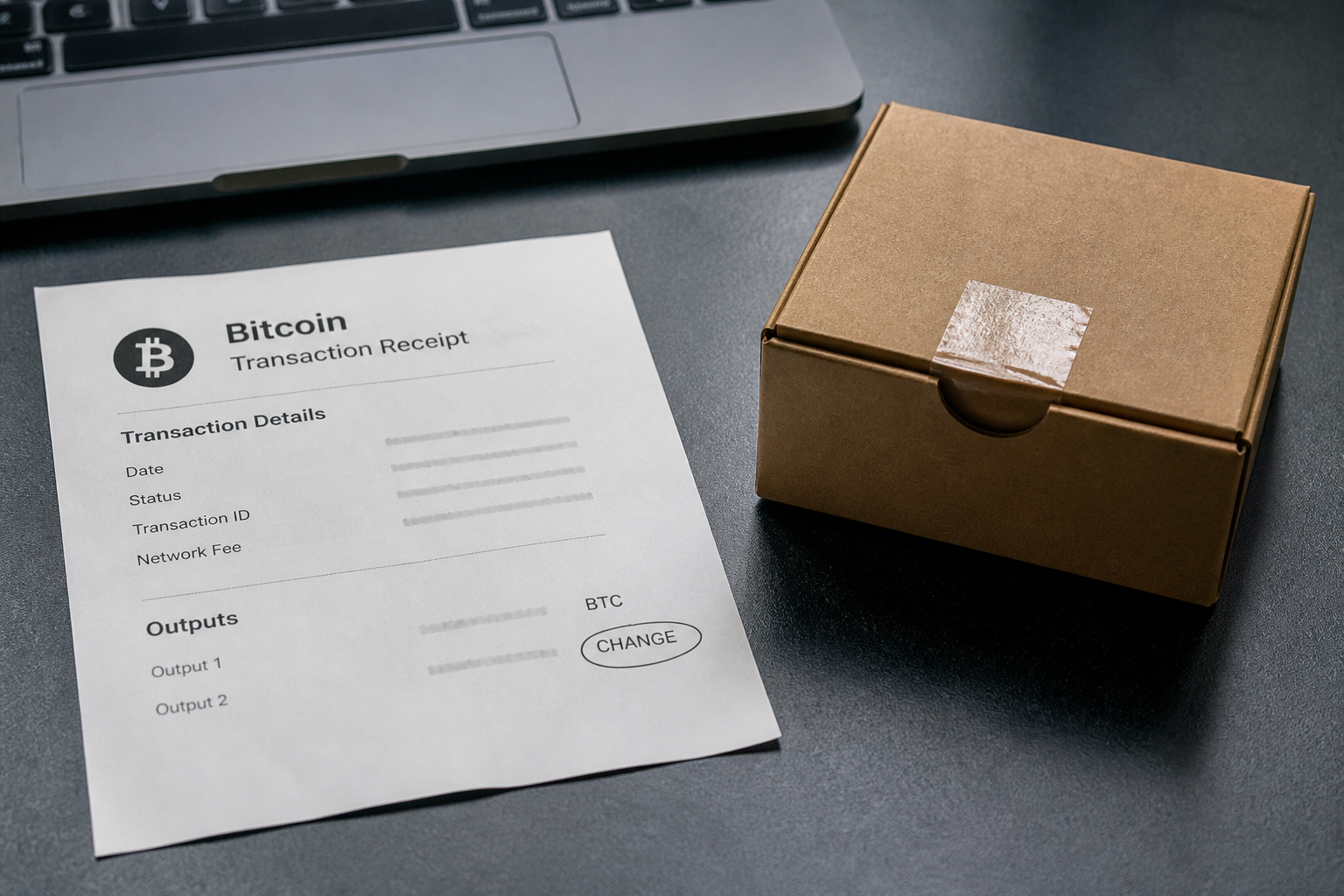
Wallets invent change so you do not have to send the whole balance. That inventing is where people accidentally refill an opened address and think they were being careful.
The input is the opening
Observation on this site is the spend. A signature from a P2PKH, P2SH, or SegWit v0 output includes the public key. After confirmation, that key is public. The closed versus open page is the legend. Change does not un-publish it.
Fresh change
Most modern wallets generate a new hash-based address for change. That output can be a new closed box: only a hash is on the chain until it, too, spends. Paste the change address into the checker if you want to see the state rather than trust the UI label.
Same-address change
Some old wallets, some manual coin-control setups, and some people who “like one address” send change home. That is reuse. You have not created a new secret. You have topped up an open script. Consolidation for fees can still be rational. Do not tell yourself the box closed again.
What to do
If you are moving coins to a still-closed address on purpose, send the full balance you mean to move and let the destination wallet create its own receive address — the walkthrough is here. Do not send half and leave the rest on the opened input's sibling. There are no prices on this page and no reason to rush.
Quick answers
- Does sending change close the old address?
- No. The spent input stays open. Only a new unspent hash-based script can be a new closed box.
- Is leftover change an emergency?
- No. It is hygiene. Wallets already generate a new change address by default.
- Should I sweep dust from an opened address?
- Only if you want fewer open boxes. Fees and timing are yours. This is not investment advice.