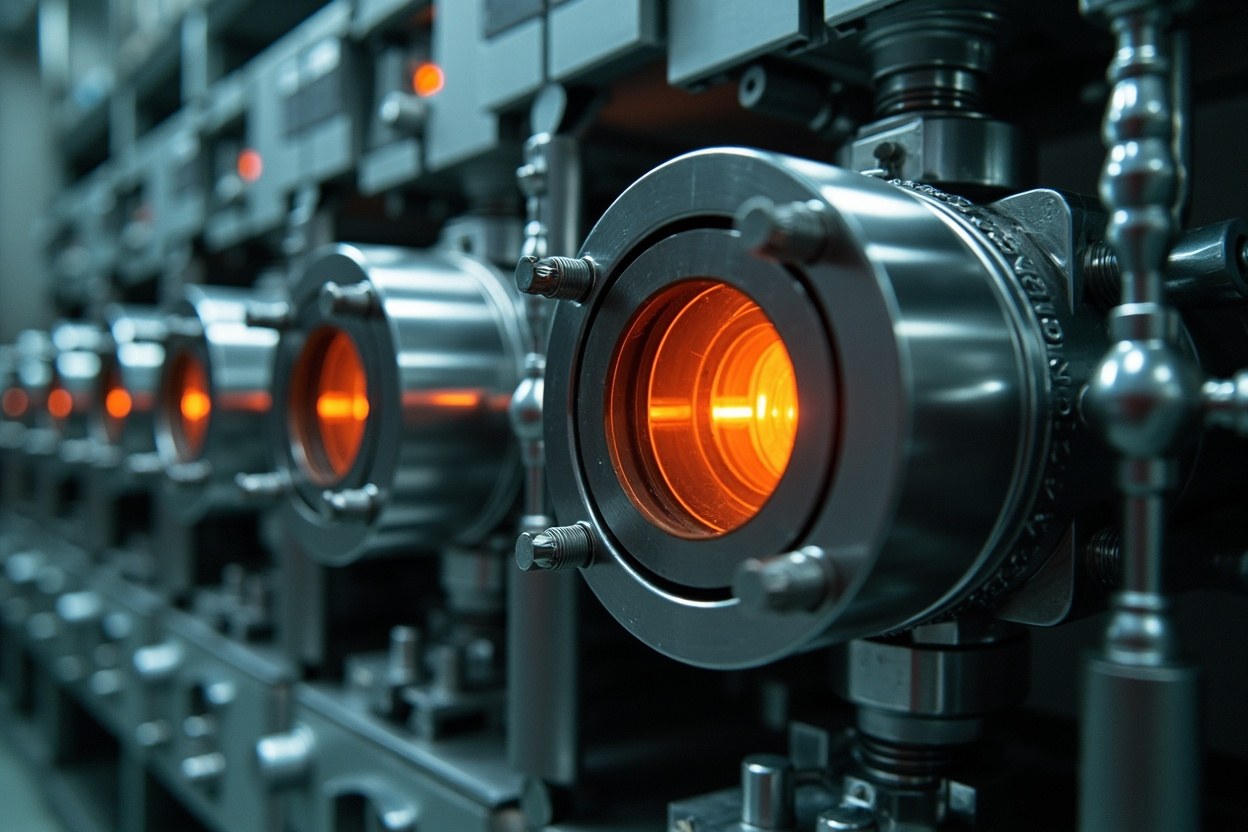
A nine minute coherence result, not a Shor demo, moves the box one notch this month.
Quantum tape recorder captures the box (46 chars)
Updated 20 October 2026
That is a quantum tape recorder. It is not a quantum key thief. A team at a national metrology lab reported a coherence time past nine minutes on a single trapped ion at room temperature, with a fidelity that survived a slow classical replay. The number is not a Shor run. It is not a million qubit day. It is a single qubit, kept quiet, for long enough that the words store and retrieve have to be revisited, and the words box and lock have to be split cleanly again on this site. The runway counter on this beat has ticked past eleven billion dollars in vulnerable outputs that pay to legacy addresses, and BIP 360 has been sitting in draft since the spring. The dial that moved is the tape recorder dial, not the factoring dial.
Coherence versus factoring, and why the box cares
Bitcoin custody is a box problem. The hash closes the box, the signature opens it, and the question of when a quantum computer can spend a legacy output is, mechanically, a question of how long a coherent enough machine can hold a circuit that runs Shor. The work that moved this month is not that circuit. It is a single qubit, held quiet for nine minutes, in a setup that trades speed for stillness. The lab is interested in clocks, not in breaking elliptic curve signatures, and the press release says so, which is why the box model on this site is the right place to look before the box model is rewritten.
The reason the box cares is the difference between a tape recorder and a thief. A tape recorder is a device that holds a signal without destroying it, and serves the signal back on demand, with the original envelope intact. A thief is a device that uses the signal once and discards it. Shor needs the second kind. It needs a quantum circuit that ingests a public key, runs modular exponentiation against the order of the curve, and collapses onto a discrete log that the classical computer can read. That circuit eats coherence the way a pump eats water, and a nine minute tape recorder is not a pump.
What it is is a clock. Trapped ion qubits that hold phase for nine minutes are, in the language of the laboratory, primary frequency standards. They are a metrology result. They are also, by an honest chain of reasoning, the kind of device you would build a quantum hard drive out of, and a quantum hard drive is the kind of device that changes the threat model for paper wallets, passphrase seeds, and metal plates that have been on a shelf since 2010. A Shor run against secp256k1 needs around two thousand five hundred logical qubits, sustained for hours, with surface code overhead that brings the physical count past ten million. A tape recorder needs one logical qubit, sustained for nine minutes, with a fidelity figure that the press release prints and that the box model on this site has been waiting for, because the box model is not a tutorial and the runway counter is a number, and both of them need a clock to anchor them.
So this month the runway counter does not move on factoring. The runway counter moves on the clock dial. The clock dial is the dial that says, in the language of the lab, that quantum information can be stored long enough that a single stolen key, captured today, can be filed for later opening, and that the filing system is no longer a thought experiment. The cat in the box is still not in the box. The clock that watches the box is now a clock worth naming.
What a tape recorder changes about BIP 360 and the runway
BIP 360 is a draft that proposes, among other things, a new address type that commits to a post-quantum signature scheme at the consensus layer, with a phased migration window for legacy outputs that pay to vulnerable scripts. The timing of the migration window is set, in the draft text, by a calendar rather than by a runway counter, and the calendar has been the subject of a long argument on this beat. The argument is that a calendar without a runway counter is a calendar that ages on faith. The runway counter on this site, for the record, ticked past eleven billion dollars in vulnerable outputs in the late summer, and the counter is not a thought experiment either.
What a tape recorder changes is the shape of the threat. The threat was, until this month, a number of qubits. The number was, in the language of the budget, a million qubit day, and the budget is the right framing for an active attack that runs Shor against a public key in real time, because the public key is exposed at spend time and the clock starts at spend time. A million qubit day was a number that put the active attack on a horizon that the calendar could absorb. A tape recorder puts a passive attack on a shorter horizon. A passive attack is one that captures a public key today, holds it on a quantum device, and waits for a factoring circuit to be built. The waiting is no longer a thought experiment when the device can hold the key for nine minutes without the lab having to rebuild the apparatus every minute.
The passive attack changes the question from when can Shor run to when can a key be filed. The filing cost is the number of qubits, and the number is one. The filing fidelity is the nine minute figure. The filing duration is the gap between the BIP 360 migration deadline and the date the passive filing lab reaches scale. A single ion at room temperature is not a lab at scale. A single ion is a single ion. The lab that built it, however, is a national metrology lab, and the line between a single ion and a rack of single ions is an engineering line, not a physics line, and the engineering line is the line the box model has been waiting for, because the box model is a model of boxes, not a model of physics.
For BIP 360 the implication is procedural rather than technical. The migration window in the draft has a phase that is gated on a quantum readiness signal, and the signal is, in the draft text, defined as a NIST primary standard with a coherence figure past a threshold that is, in the draft text, left blank. A blank threshold is a blank cheque, and a blank cheque is the wrong shape for a consensus change. The coherence figure this month is a candidate number for the blank. The blank is not filled by a press release. The blank is filled by a BIP, and the BIP is not this post.
What the box looks like, and what the recorder cannot do
The box is a UTXO. The UTXO is closed by a hash, and the hash is a SHA 256 double, and the double is, on the best public estimate, outside the reach of Grover for any device that fits on a budget that a nation state can print. The box is opened by a signature, and the signature is, on the best public estimate, inside the reach of a sufficiently large Shor run against secp256k1, on a horizon that the runway counter on this beat has been trying to make honest. The tape recorder does not change the hash. The tape recorder does not change the signature. The tape recorder changes the time a stolen key can be held, and the time a stolen key can be held is the time the box has to be opened before the key is filed.
The box, in other words, is still a box. The lock is still a lock. The key is still a key. The key has a new shelf life, and the shelf life is nine minutes at a single ion, and the shelf life will, in the language of the lab, scale, and the scaling is the question that BIP 360 has to answer, not the question this post has to answer. This post is a marker. The marker says, in the language of the runway counter, that the dial that turned is the dial of storage, not the dial of attack, and that the runway counter has not yet moved past the eleven billion dollar mark, and that the mark is the mark, and that the box is not open.
For the cat on this site, the tape recorder is a clock that ticks past nine minutes, and the cat is not in the box, and the box is not on the table, and the table is not a threat model, and the threat model is the tape recorder, and the tape recorder is on a shelf, and the shelf is in a lab, and the lab is a national metrology lab, and the national metrology lab is not a Bitcoin attacker, and the Bitcoin attacker is not yet a tape recorder, and the tape recorder is not yet an attacker, and the line between the two is the line this post is drawing, in the language of the box, on the page this site is built on.
Quick answers
- Does the nine minute coherence result mean Shor can run on a Bitcoin key?
- No. The result is a single qubit held quiet, not a circuit that runs modular exponentiation. The runway counter on this beat has not moved on this news, and BIP 360 is still a draft.
- Should holders of legacy outputs move their funds to a post-quantum address today?
- A BIP 360 address type is not yet a consensus rule. The right move is to watch the BIP, not to paste a seed into a watch only field, and to plan rather than to transact.
- What changes for paper wallets and metal plates?
- The passive threat changes. A public key captured today can, in principle, be held on a quantum device until a factoring circuit is built. The time the key can be held is the figure to watch, and the figure is now a clock number rather than a qubit number.
- Is the box open?
- No. The box is closed by a hash and opened by a signature. The signature has not been forged at the size of a Bitcoin spend. The box is not open.